


How does PVC composite aluminum foil tube significantly improve gas/liquid barrier performance?
Release Time : 2025-11-27
In modern industry, medical, food, and household appliance fields, flexible hoses are not only channels for fluid transmission but also crucial barriers ensuring the purity, safety, and stability of the contents. However, traditional single-material plastic hoses (such as PE, PVC, or PP hoses) often pose a significant risk of permeation when exposed to oxygen, water vapor, odors, or volatile substances, making them unsuitable for high-barrier applications. In contrast, PVC composite aluminum foil tubes, with their unique multi-layered composite structure, especially the introduction of the intermediate aluminum foil layer, achieve highly efficient barrier against gas and liquid permeation, making them a leader among high-performance hose solutions.
Limitations of Barrier Performance in Ordinary Plastic Hoses
General-purpose plastics such as polyethylene (PE) or unmodified polyvinyl chloride (PVC) are non-polar or semi-crystalline polymers with tiny gaps between their molecular chains. Although these gaps are invisible to the naked eye, they are sufficient to allow small molecule gases (such as oxygen and carbon dioxide) or water vapor to slowly permeate. For example, in water purifier pipes, if ordinary PVC hoses are used, oxygen from the air may seep into the pipe, accelerating the oxidation of metal ions in the water; in cosmetic packaging, fragrance components are easily lost due to evaporation, affecting product efficacy and odor. Therefore, single-material plastics have significant shortcomings in highly sensitive applications.
Structural Advantages of PVC Composite Aluminum Foil Tubes
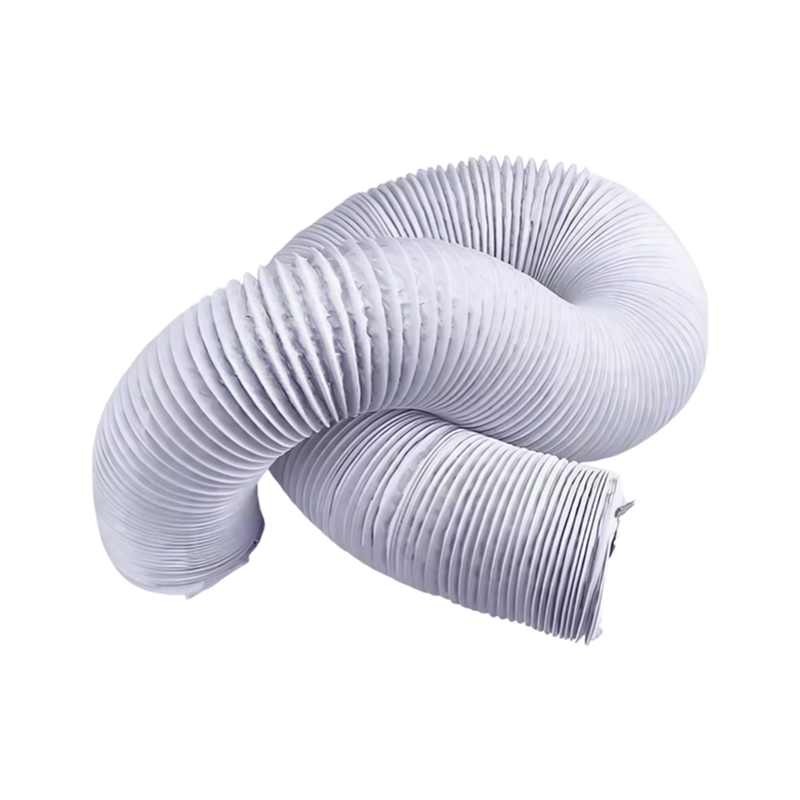
PVC composite aluminum foil tubes typically employ a "three-layer co-extrusion" or "five-layer composite" structure, typically consisting of: an outer PVC protective layer + a middle aluminum foil layer + an inner food-grade PVC contact layer. The aluminum foil layer (typically 6–25 micrometers thick) is the core component for achieving high barrier performance.
Aluminum is a dense metal with tightly packed molecules, making it virtually impermeable to air, moisture, and light. When embedded as an intermediate functional layer in a hose structure, it effectively cuts off the permeation paths of gas and liquid molecules. Experimental data shows that adding aluminum foil reduces oxygen permeability by over 99% and water vapor permeability by over 95%, far superior to pure plastic hoses. In addition to providing flexibility and ease of processing, the PVC layer can be formulated to achieve additional properties such as UV resistance, low-temperature resistance, and anti-aging properties. White or black surface layers can further enhance light-blocking effects and prevent degradation of photosensitive substances.
Practical Applications and Barrier Value
Food and Drinking Water Sector: In water purifiers and water dispenser connecting pipes, PVC composite aluminum foil tubes prevent the infiltration of external contaminants and odors, ensuring clean and odorless water that meets FDA or NSF drinking water standards. Pharmaceuticals and Biological Products: Infusion tubing or reagent delivery tubing requires absolute isolation from microorganisms and gas exchange; the aluminum foil composite structure effectively prevents drug oxidation or contamination, ensuring treatment safety. Cosmetics and Daily Chemicals: High-value liquids such as serums and essential oils are extremely sensitive to oxygen and light; black composite aluminum foil tubes not only block oxygen and moisture but also completely block light, extending product shelf life. Household Appliance Steam Ducts: Steam pipes in coffee machines and steam irons need to be heat-resistant and prevent water vapor leakage. The composite aluminum foil structure significantly improves sealing and pressure resistance while maintaining flexibility.
Engineering Wisdom Balancing Flexibility and Functionality
It's worth emphasizing that despite the addition of aluminum foil, the PVC composite aluminum foil tube maintains excellent bending performance and flexural strength through advanced composite processes (such as dry lamination or co-extrusion bonding), unlike pure metal tubes which are prone to breakage. Furthermore, the product supports full-size customization to fit different interfaces and installation spaces, truly achieving a balance of rigidity and flexibility.
The core reason why the PVC composite aluminum foil tube stands out among numerous flexible tubes lies in its "1+1>2" effect through material composite technology, perfectly integrating the processing advantages of plastics with the barrier properties of metals. In today's increasingly stringent requirements for gas/liquid barrier properties, it is not only a product of technological upgrades but also a key component ensuring product quality, safety, and user experience. In the future, with increasingly stringent environmental regulations and growing demand for high-end manufacturing, the PVC composite aluminum foil tube, with its high barrier properties, customizability, and compliant certifications, will play an irreplaceable role in many more fields.
Limitations of Barrier Performance in Ordinary Plastic Hoses
General-purpose plastics such as polyethylene (PE) or unmodified polyvinyl chloride (PVC) are non-polar or semi-crystalline polymers with tiny gaps between their molecular chains. Although these gaps are invisible to the naked eye, they are sufficient to allow small molecule gases (such as oxygen and carbon dioxide) or water vapor to slowly permeate. For example, in water purifier pipes, if ordinary PVC hoses are used, oxygen from the air may seep into the pipe, accelerating the oxidation of metal ions in the water; in cosmetic packaging, fragrance components are easily lost due to evaporation, affecting product efficacy and odor. Therefore, single-material plastics have significant shortcomings in highly sensitive applications.
Structural Advantages of PVC Composite Aluminum Foil Tubes
PVC composite aluminum foil tubes typically employ a "three-layer co-extrusion" or "five-layer composite" structure, typically consisting of: an outer PVC protective layer + a middle aluminum foil layer + an inner food-grade PVC contact layer. The aluminum foil layer (typically 6–25 micrometers thick) is the core component for achieving high barrier performance.
Aluminum is a dense metal with tightly packed molecules, making it virtually impermeable to air, moisture, and light. When embedded as an intermediate functional layer in a hose structure, it effectively cuts off the permeation paths of gas and liquid molecules. Experimental data shows that adding aluminum foil reduces oxygen permeability by over 99% and water vapor permeability by over 95%, far superior to pure plastic hoses. In addition to providing flexibility and ease of processing, the PVC layer can be formulated to achieve additional properties such as UV resistance, low-temperature resistance, and anti-aging properties. White or black surface layers can further enhance light-blocking effects and prevent degradation of photosensitive substances.
Practical Applications and Barrier Value
Food and Drinking Water Sector: In water purifiers and water dispenser connecting pipes, PVC composite aluminum foil tubes prevent the infiltration of external contaminants and odors, ensuring clean and odorless water that meets FDA or NSF drinking water standards. Pharmaceuticals and Biological Products: Infusion tubing or reagent delivery tubing requires absolute isolation from microorganisms and gas exchange; the aluminum foil composite structure effectively prevents drug oxidation or contamination, ensuring treatment safety. Cosmetics and Daily Chemicals: High-value liquids such as serums and essential oils are extremely sensitive to oxygen and light; black composite aluminum foil tubes not only block oxygen and moisture but also completely block light, extending product shelf life. Household Appliance Steam Ducts: Steam pipes in coffee machines and steam irons need to be heat-resistant and prevent water vapor leakage. The composite aluminum foil structure significantly improves sealing and pressure resistance while maintaining flexibility.
Engineering Wisdom Balancing Flexibility and Functionality
It's worth emphasizing that despite the addition of aluminum foil, the PVC composite aluminum foil tube maintains excellent bending performance and flexural strength through advanced composite processes (such as dry lamination or co-extrusion bonding), unlike pure metal tubes which are prone to breakage. Furthermore, the product supports full-size customization to fit different interfaces and installation spaces, truly achieving a balance of rigidity and flexibility.
The core reason why the PVC composite aluminum foil tube stands out among numerous flexible tubes lies in its "1+1>2" effect through material composite technology, perfectly integrating the processing advantages of plastics with the barrier properties of metals. In today's increasingly stringent requirements for gas/liquid barrier properties, it is not only a product of technological upgrades but also a key component ensuring product quality, safety, and user experience. In the future, with increasingly stringent environmental regulations and growing demand for high-end manufacturing, the PVC composite aluminum foil tube, with its high barrier properties, customizability, and compliant certifications, will play an irreplaceable role in many more fields.