


How do fire dampers ensure accurate and unerring response in real fires?
Release Time : 2025-12-11
In building fire protection systems, fire dampers act as "safety sentinels" on ventilation and air conditioning ducts. They operate silently under normal conditions, ensuring unobstructed airflow; however, once a fire breaks out and the smoke temperature rises to 70°C, they quickly shut off, preventing the spread of fire and toxic fumes through the ducts. This seemingly simple "thermal triggering" mechanism requires a delicate balance between extreme reliability and high interference resistance—ensuring millisecond-level response in real fires while avoiding false shutdowns due to daily high temperatures, steam, or equipment malfunctions, which could disrupt normal ventilation or even cause panic.
1. Fusible Link: Precise Calibration of Temperature-Sensitive Elements
The core triggering device of a fire damper is a 70°C fusible link, typically made of a low-melting-point alloy. Its melting point is rigorously calibrated and batch-consistently controlled to ensure reliable melting within the 68–72°C range. More importantly, the fusible link is installed at a location directly impacted by the airflow and optimized for thermal conductivity, allowing it to quickly sense the actual gas temperature inside the duct, rather than being affected by external or ambient radiant heat. Each batch undergoes high-temperature aging and operating temperature tests before leaving the factory to eliminate the risk of premature melting or delayed melting.
2. Mechanical Structure Design: Eliminating False Triggers from Non-Heat Sources
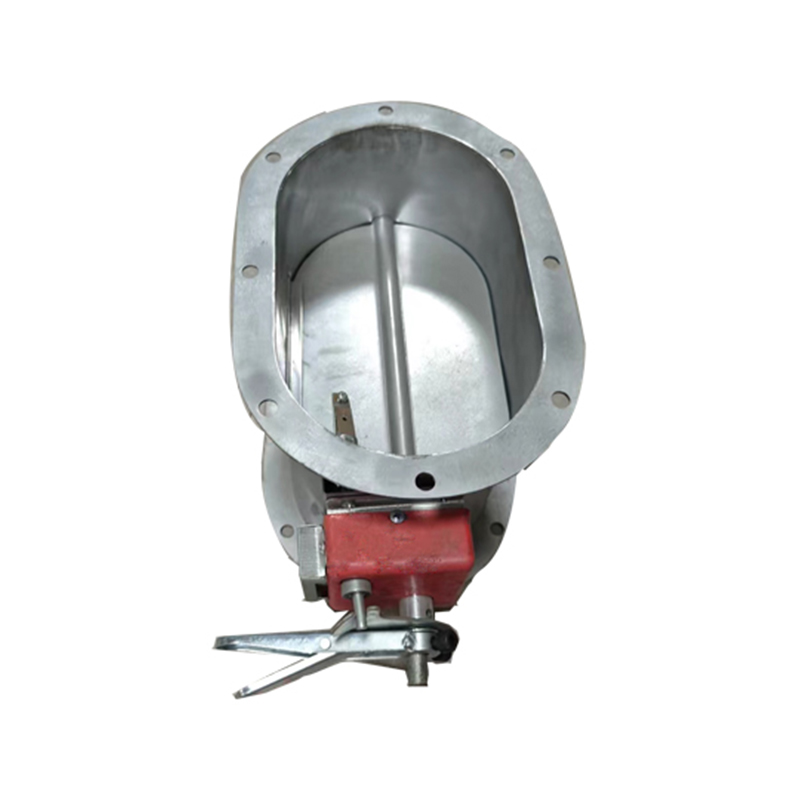
The fire damper employs a purely mechanical closing mechanism—a fusible link acts as a "locking pin." Once melted, the pre-tensioned stainless steel torsion spring immediately releases energy, driving the valve blade to rotate to the fully closed position. The entire process requires no electricity or external signals, fundamentally eliminating false triggers caused by electromagnetic interference, voltage fluctuations, or control system malfunctions. Simultaneously, the valve body structure features anti-vibration latches and limit devices, maintaining a stable open state even under fan start-up and shutdown vibrations or slight pipe deformation, preventing accidental spring release due to mechanical shaking.
3. Environmental Adaptability Design: Resisting Daily High-Temperature Interference
In areas adjacent to kitchen exhaust ducts, boiler room return air ducts, or areas with high summer temperatures, temporary overheating may occur within the ductwork, but this is far from reaching fire-prone levels. To address this, the fusible link of the fire damper is encapsulated within an insulated cavity, responding only to continuous, stable airflow above 70°C, and possessing "thermal inertia filtering" capabilities against instantaneous heat waves or localized hotspots. Furthermore, some high-end models incorporate a bimetallic strip for auxiliary judgment, allowing triggering only after the temperature has consistently exceeded a threshold for a certain period, further enhancing resistance to false triggering.
4. Signal Feedback and Status Monitoring: Achieving Closed-Loop Verification
Modern fire dampers commonly integrate microswitches or magnetic sensors, sending an electrical signal to the fire control center the instant the valve closes, confirming that the action has been executed. This design is not only used for联动 (linking) the shutdown of fans and the activation of the smoke extraction system, but also for periodic self-checks to determine whether the valve is in a normal standby state. If the system detects "closed without triggering" or "failed to respond when it should have closed," it will issue a fault warning, facilitating timely troubleshooting of jams, corrosion, and other problems by maintenance personnel, ensuring flawless operation in critical moments.
5. A Balance of Customization and Standardization: Adapting to Complex Operating Conditions
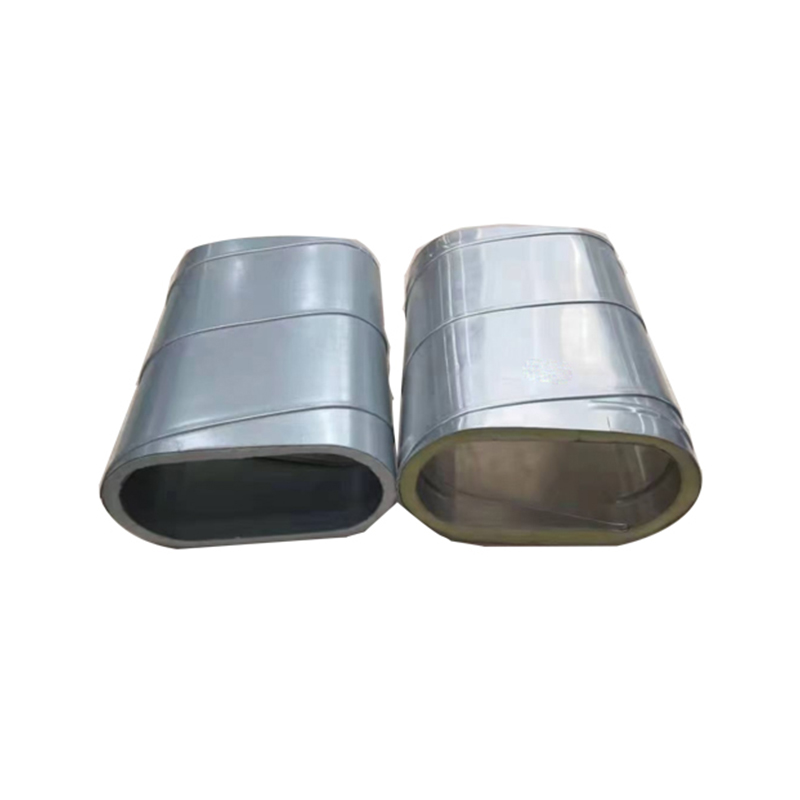
Fire dampers can be customized into rectangular, circular, or elliptical shapes to match different duct systems. Regardless of its form, the internal layout of the heat-sensitive element and the airflow channel are optimized through CFD simulation to ensure that the fusible link accurately senses the actual flue gas temperature under various installation angles and wind speeds.
The fire damper's "precise response" is not accidental, but the result of a deep integration of materials science, mechanical engineering, and fire protection regulations. It uses the simplest physical principle—thermal fusion + spring reset—to construct a reliable lifeline. Silently guarding in the unseen daily routine, and acting decisively in life-or-death moments, this is precisely the value of the fire damper as a core component of passive fire protection: not a moment's interference, not a second's delay in protection.
1. Fusible Link: Precise Calibration of Temperature-Sensitive Elements
The core triggering device of a fire damper is a 70°C fusible link, typically made of a low-melting-point alloy. Its melting point is rigorously calibrated and batch-consistently controlled to ensure reliable melting within the 68–72°C range. More importantly, the fusible link is installed at a location directly impacted by the airflow and optimized for thermal conductivity, allowing it to quickly sense the actual gas temperature inside the duct, rather than being affected by external or ambient radiant heat. Each batch undergoes high-temperature aging and operating temperature tests before leaving the factory to eliminate the risk of premature melting or delayed melting.
2. Mechanical Structure Design: Eliminating False Triggers from Non-Heat Sources
The fire damper employs a purely mechanical closing mechanism—a fusible link acts as a "locking pin." Once melted, the pre-tensioned stainless steel torsion spring immediately releases energy, driving the valve blade to rotate to the fully closed position. The entire process requires no electricity or external signals, fundamentally eliminating false triggers caused by electromagnetic interference, voltage fluctuations, or control system malfunctions. Simultaneously, the valve body structure features anti-vibration latches and limit devices, maintaining a stable open state even under fan start-up and shutdown vibrations or slight pipe deformation, preventing accidental spring release due to mechanical shaking.
3. Environmental Adaptability Design: Resisting Daily High-Temperature Interference
In areas adjacent to kitchen exhaust ducts, boiler room return air ducts, or areas with high summer temperatures, temporary overheating may occur within the ductwork, but this is far from reaching fire-prone levels. To address this, the fusible link of the fire damper is encapsulated within an insulated cavity, responding only to continuous, stable airflow above 70°C, and possessing "thermal inertia filtering" capabilities against instantaneous heat waves or localized hotspots. Furthermore, some high-end models incorporate a bimetallic strip for auxiliary judgment, allowing triggering only after the temperature has consistently exceeded a threshold for a certain period, further enhancing resistance to false triggering.
4. Signal Feedback and Status Monitoring: Achieving Closed-Loop Verification
Modern fire dampers commonly integrate microswitches or magnetic sensors, sending an electrical signal to the fire control center the instant the valve closes, confirming that the action has been executed. This design is not only used for联动 (linking) the shutdown of fans and the activation of the smoke extraction system, but also for periodic self-checks to determine whether the valve is in a normal standby state. If the system detects "closed without triggering" or "failed to respond when it should have closed," it will issue a fault warning, facilitating timely troubleshooting of jams, corrosion, and other problems by maintenance personnel, ensuring flawless operation in critical moments.
5. A Balance of Customization and Standardization: Adapting to Complex Operating Conditions
Fire dampers can be customized into rectangular, circular, or elliptical shapes to match different duct systems. Regardless of its form, the internal layout of the heat-sensitive element and the airflow channel are optimized through CFD simulation to ensure that the fusible link accurately senses the actual flue gas temperature under various installation angles and wind speeds.
The fire damper's "precise response" is not accidental, but the result of a deep integration of materials science, mechanical engineering, and fire protection regulations. It uses the simplest physical principle—thermal fusion + spring reset—to construct a reliable lifeline. Silently guarding in the unseen daily routine, and acting decisively in life-or-death moments, this is precisely the value of the fire damper as a core component of passive fire protection: not a moment's interference, not a second's delay in protection.